Welcome:Shanghai Zhicai Electronic Technology co., LTD
Language:
 ∷
∷

∷
 ∷
∷


Hits : Update:2019-03-15 10:44
Compared with the early LED light-emitting diodes, the most remarkable feature of the new ultra-bright LEDs is that the brightness is increased by nearly a hundred times. The early LEDs have a luminous intensity of only a few ten to several tens of mcd, while the new LEDs have a minimum luminous intensity of 1500 mcd. Another obvious difference is that the color of the light-emitting tube is different. Early LEDs used a colored encapsulation material to obtain light of a certain color, that is, the encapsulating material functions as a color filter. The new super bright LED housing is a colorless transparent resin package, and the illuminator itself can emit light of a certain wavelength to present a certain color. It is widely used in outdoor billboards, electronic displays, traffic lights, signage, car taillights, LCD backlights, etc.
Spectral distribution: At present, the spectral wavelength distribution of super bright LEDs commonly used in several colors in China is 460-636 nm, and the wavelengths are blue, green, yellow-green, yellow, yellow-orange, and red in order from short to long. Typical peak wavelengths for several common color LEDs are: blue - 470 nm, cyan - 505 nm, green - 525 nm, yellow - 590 nm, orange - 615 nm, red - 625 nm.
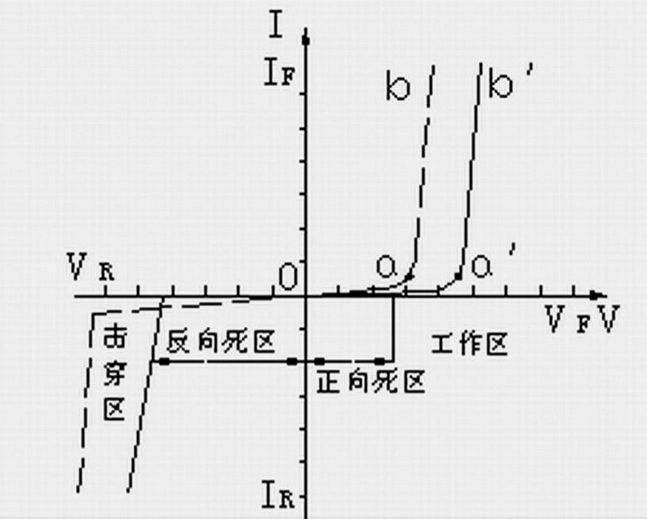
Forward conduction voltage drop distribution: In the early days, the chip material of various color LEDs was GaAs, and the forward voltage drop was about 1.8V. The chip materials of different colors of super bright LEDs are different. The chip materials of red, orange and yellow LEDs are AlGaInP, and the forward voltage drop is 1.8V~2.5V, with a typical value of 2.0V; green, blue and white. The chip material of the LED is InGaN, and the forward voltage drop is 2.8-4.2V, which is typically 3.6V.
Compared with the early LED light-emitting diodes, the most remarkable feature of the new ultra-bright LEDs is that the brightness is increased by nearly a hundred times. The early LEDs have a luminous intensity of only a few ten to several tens of mcd, while the new LEDs have a minimum luminous intensity of 1500 mcd. Another obvious difference is that the color of the light-emitting tube is different. Early LEDs used a colored encapsulation material to obtain light of a certain color, that is, the encapsulating material functions as a color filter. The new super bright LED housing is a colorless transparent resin package, and the illuminator itself can emit light of a certain wavelength to present a certain color. It is widely used in outdoor billboards, electronic displays, traffic lights, signage, car taillights, LCD backlights, etc.
Spectral distribution: At present, the spectral wavelength distribution of super bright LEDs commonly used in several colors in China is 460-636 nm, and the wavelengths are blue, green, yellow-green, yellow, yellow-orange, and red in order from short to long. Typical peak wavelengths for several common color LEDs are: blue - 470 nm, cyan - 505 nm, green - 525 nm, yellow - 590 nm, orange - 615 nm, red - 625 nm.
Forward conduction voltage drop distribution: In the early days, the chip material of various color LEDs was GaAs, and the forward voltage drop was about 1.8V. The chip materials of different colors of super bright LEDs are different. The chip materials of red, orange and yellow LEDs are AlGaInP, and the forward voltage drop is 1.8V~2.5V, with a typical value of 2.0V; green, blue and white. The chip material of the LED is InGaN, and the forward voltage drop is 2.8-4.2V, which is typically 3.6V.
Contact:Tony fang
Phone:13512118719
Tel:4008209320; 021-36411816
Email:Tony@sh-gren.com
Add:Shanghai,Baoshan,Changyi road 188th,202 Room


 QQ Online
